Bedside crib and breastfeeding: night feeds
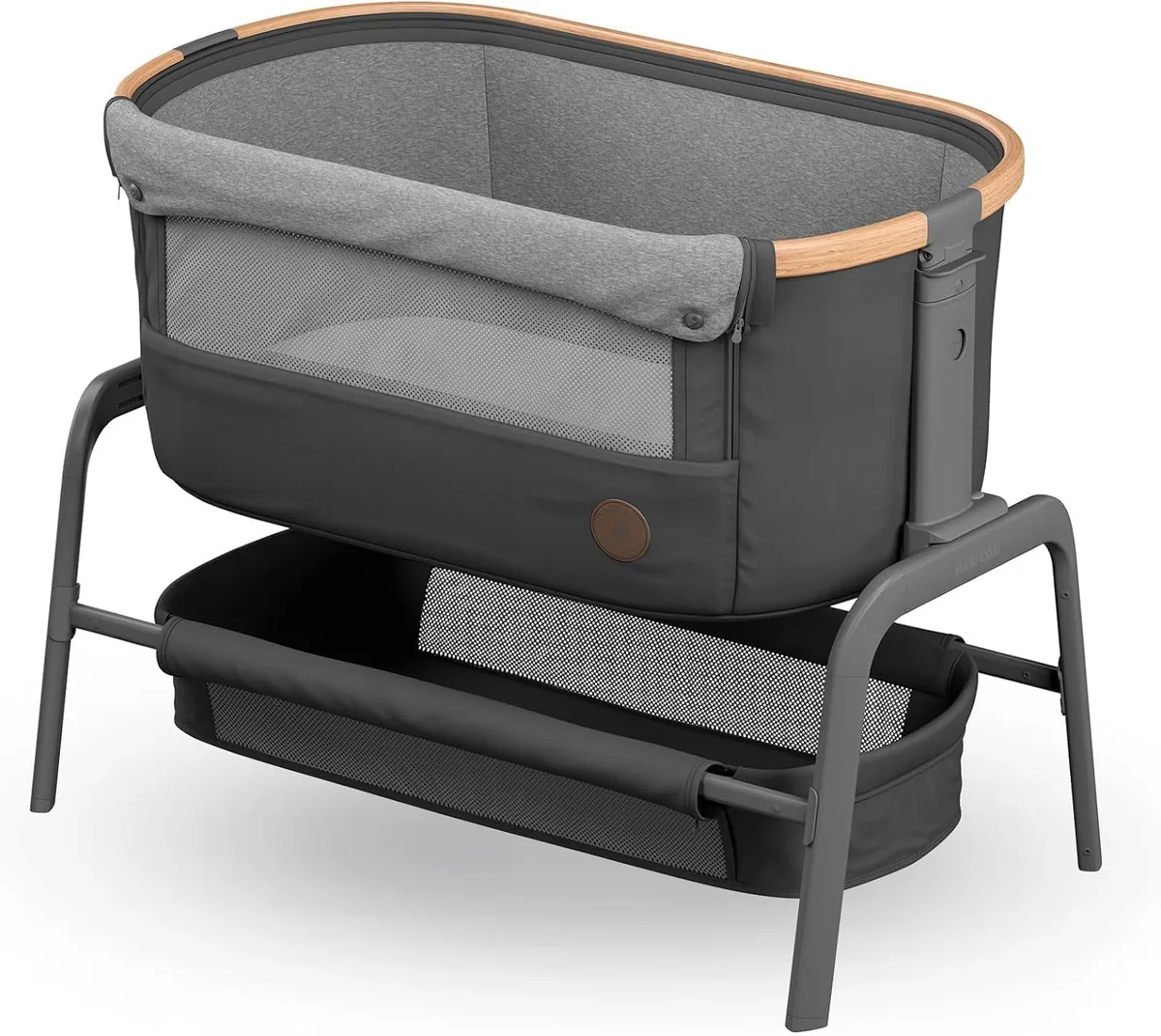
For many breastfeeding mothers, a bedside crib is first and foremost a tool for the nights. Baby within arm’s reach, feeds without getting up, a return to the crib without waking the whole house. Here is how to organise these moments while keeping a safe sleep space.
Contents
Why a bedside crib helps breastfeeding
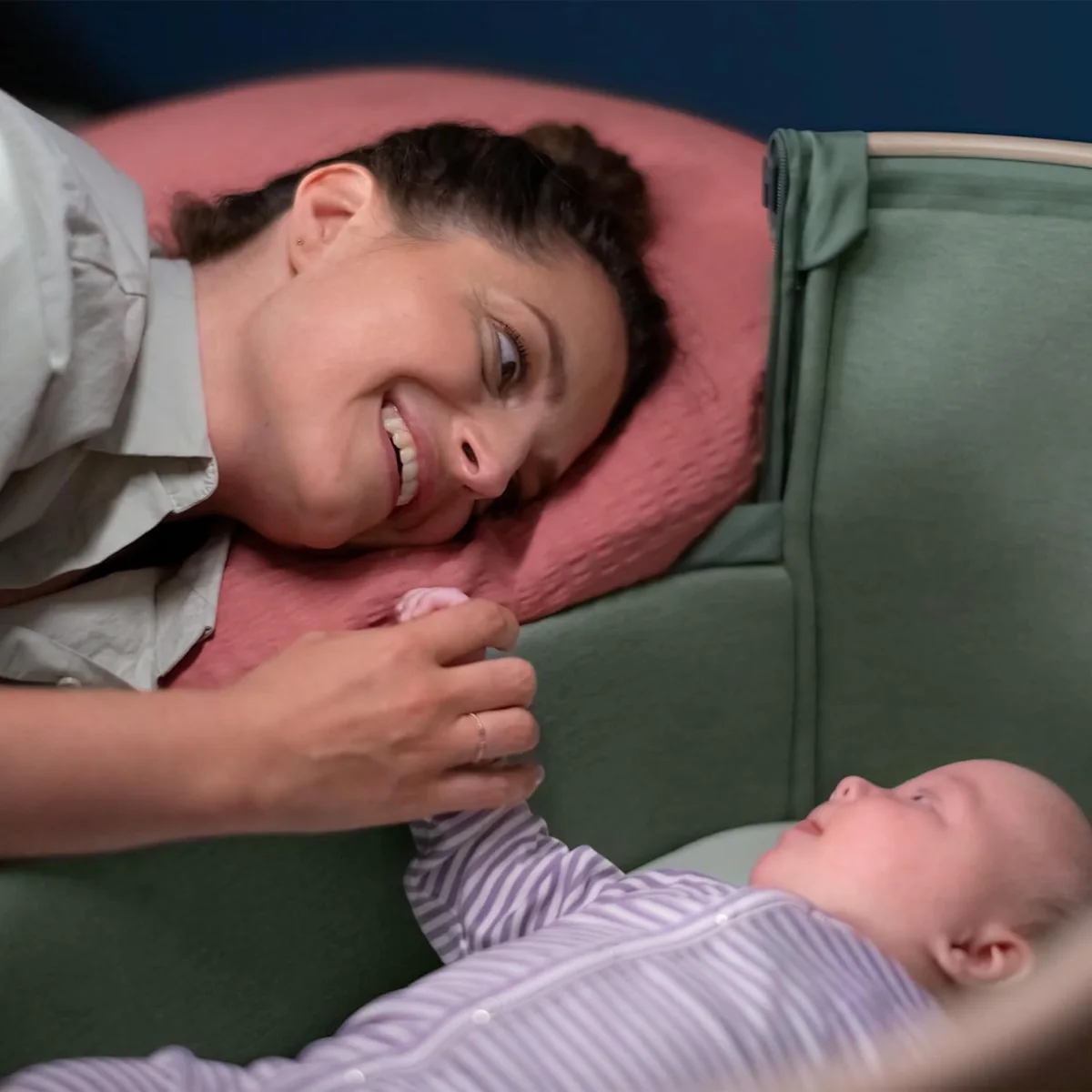
A breastfed newborn feeds often, day and night. In the first weeks, night feeds are frequent, and they help establish milk supply. Every night feed with a crib across the room means getting up, picking baby up, settling into an armchair or back into bed, then putting baby down again. With a bedside crib with its side lowered, baby sleeps a few centimetres away. You notice the first signs of hunger before baby cries, you pick them up without getting up, you feed them, then you lay them back down in their own sleep space.
Saving all those movements has several effects. Feeds start earlier, before baby is fully awake. You stay half asleep and drift off again more quickly. And baby, reassured by your presence, often settles back to sleep more easily. For a breastfeeding mother, this is often what makes the difference between exhausting nights and bearable ones.
A bedside crib also follows the advice on room sharing. The French public health site Sante.fr describes sharing the room as protective before 6 months and states that the crib can be placed against the parents’ bed. Baby sleeps close to you, but in their own sleep space. That separation is what distinguishes a bedside crib from bed sharing.
Choosing the right side and setting up properly
Set up the bedside crib on the breastfeeding mother’s side. Check that this side of the bed is compatible: for the Maxi-Cosi Iora, a total height of at least 56 cm, a frame of 30 to 49 cm and a gap of no more than 5.5 cm between the frame and the mattress. Adjust the height according to the instructions, slide the base under the bed and fit the attachment system. Test it: when you push on the crib, it must not move away. Our article setting up and attaching a bedside crib covers every step.
Keep your side of the bed clear. Your pillow should not sit at the edge on the crib side, and your duvet should stay over you, without spilling towards baby. Many breastfeeding mothers pull their duvet up less high, or use a smaller duvet, to stop it slipping.
A night feed, step by step
- Spot the signs of hunger: baby turns their head, opens their mouth, brings their hands to their mouth, becomes restless. With a bedside crib, you see them without switching on a light.
- Switch on a soft light, a night light that does not shine directly on baby’s face.
- Pick baby up from the crib and settle comfortably, sitting against the headboard or in the position you prefer.
- Feed baby, switching sides if needed. Keep your movements calm and your voice low.
- Wind baby if needed, or let the other parent do it.
- Change baby if needed, with the supplies ready in the basket.
- Put baby back in the crib, on their back, in the middle of the mattress, before you go back to sleep.
Positions for feeding at night
At night, sitting up against the headboard with a cushion behind your back is the easiest position to get out of when you put baby down. A breastfeeding pillow can support your arm and baby’s weight. Take it off the bed after the feed, and never let baby sleep on it.
Some mothers feed lying on their side. This position is restful, but it makes falling asleep during the feed more likely. If you choose it, stay alert and put baby back in the crib as soon as they have finished. A midwife or a lactation consultant can show you the positions that suit you, and check baby’s latch.
After a caesarean
After a caesarean, getting up and bending over are painful for several days, sometimes several weeks. A bedside crib is especially useful then: baby is at your level, and you can pick them up with less effort. The Iora’s sliding system brings the crib as close as possible to the mattress. Ask the other parent to pass baby to you during the first nights if the movement hurts, and follow the medical team’s advice about how you move.
Bottle feeding
A bedside crib is useful too if baby is bottle fed. Prepare what you need for the night in advance, following hygiene rules and the instructions for the formula you use. Parents can then take turns with the wake-ups, each from their own side of the bed. If the crib can only be fitted on one side, the parent on that side picks baby up and the other can prepare the bottle.
The risk of falling asleep
The tiredness of the first weeks is real, and many parents fall asleep during a night feed. This is the moment when bed sharing, which the authorities do not recommend, often begins without anyone choosing it. A bedside crib is there precisely to avoid that: baby’s sleep space is within reach. Put baby back as soon as the feed ends. If you feel yourself dropping off, put baby down even before the feed has finished and ask the other parent to take over.
Remember: if you have drunk alcohol, taken medication that makes you drowsy, smoked, or are so exhausted that you can no longer fight sleep, raise the side of the crib for the night, and never fall asleep with baby on a sofa or in an armchair.
Organising your night corner
- A soft night light within reach.
- A big glass of water: breastfeeding makes you thirsty.
- A breastfeeding pillow, put away off the bed after use.
- A muslin for spit-ups.
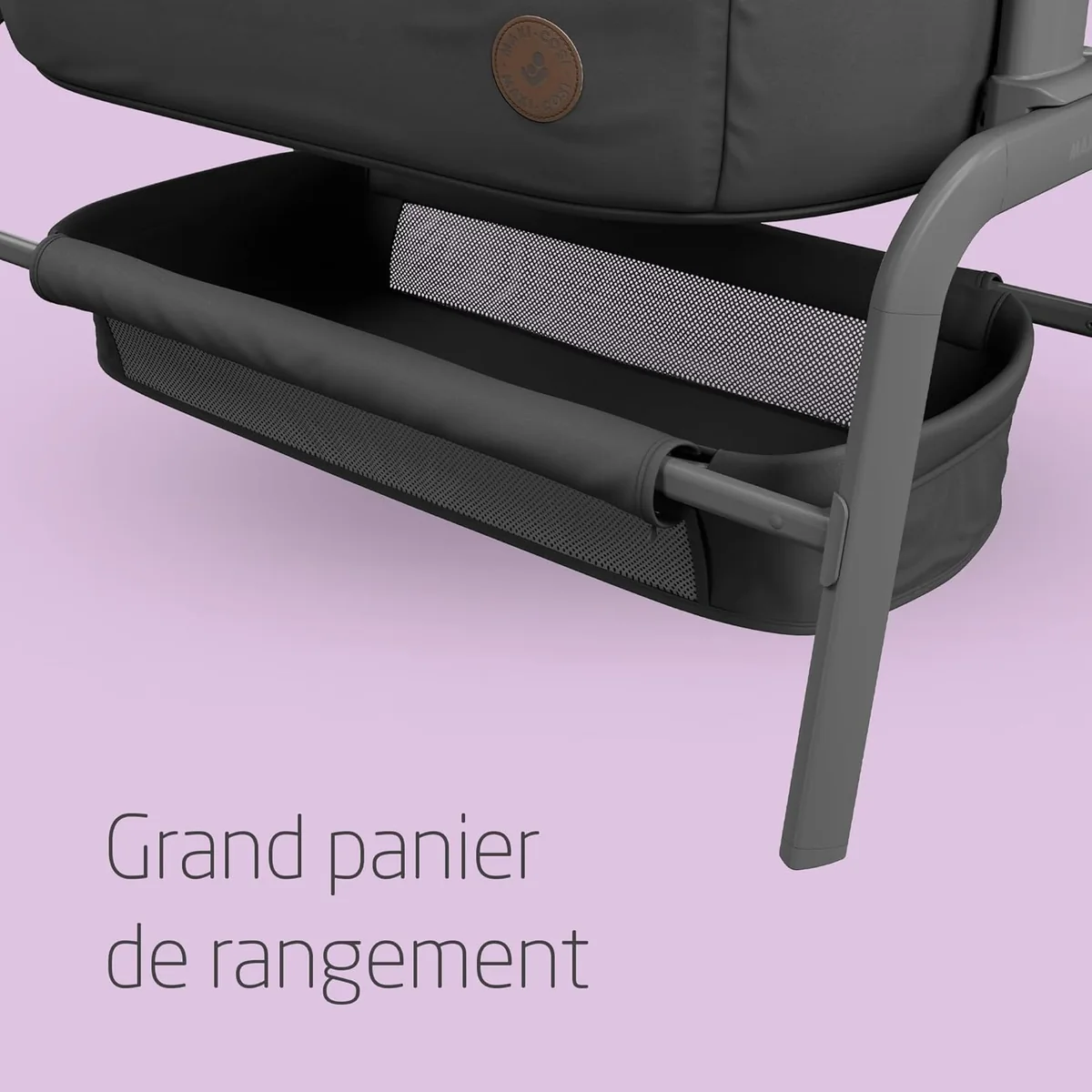
- In the crib’s basket: nappies, wipes, a spare bodysuit and a spare fitted sheet.
- Your phone on silent, to note down feeds if you wish.
Finding support
Breastfeeding can be simple, but it can also be hard at first: pain, cracked nipples, worry about milk supply, a baby who feeds very often. Do not hesitate to ask for help from your midwife, your health visitor, your GP or a lactation consultant. Breastfeeding support organisations also run helplines and parent groups.
The first nights at home
The first nights after leaving the maternity unit are often the most bewildering. Baby feeds frequently, sometimes every two or three hours, sometimes even more often during evening cluster feeds. Baby wakes, falls asleep at the breast, wakes again when put down. This rhythm is usual for a breastfed newborn, but it is exhausting. These are the weeks when a bedside crib is most useful.
Set up the bedside crib before the birth, so you come home to a sleep space that is ready. In the first nights, keep a night light on and all the supplies within reach. Do not try to impose a rhythm: follow baby’s cues, putting baby back in the crib after each feed. If you have questions about how often baby feeds, weight gain or nappies, your midwife or health visitor is the right person to ask.
Evening cluster feeding
Many newborns have a period at the end of the day or the start of the night when they feed very often, with short breaks. During these moments, it is tempting to keep baby against you in bed. If you are wide awake, sitting up, and baby is feeding, there is no problem. The rule stays the same: as soon as the feed ends and baby falls asleep, put them back in the crib. If you feel sleep taking over, ask the other parent to take baby.
The other parent’s role
When baby is breastfed, the other parent sometimes feels like a spectator at night. There is plenty for them to do. They can get up for nappy changes, wind baby, put baby back in the crib, bring a glass of water, get the pillow ready. They can handle the wake-ups that are not about hunger. And they can make sure the mother rests during the day. If the bedside crib is on the mother’s side, the other parent can also check every week that the setup is still correct.
Breast pumps and expressed milk in a bottle
Some families combine breastfeeding with bottles of expressed breast milk, so that the other parent can feed baby at night. A bedside crib is still useful: the parent giving the bottle can lift baby from the crib and put them back afterwards. Store expressed milk following the hygiene and storage rules your midwife or health visitor has given you. Prepare the equipment before bed to limit trips back and forth.
Looking after your back
Breastfeeding at night, often leaning forward, tires your back and shoulders. A bedside crib reduces the movements, but your posture matters too. Sit well supported, with a cushion behind your back. Bring baby to you rather than leaning towards baby. Use a breastfeeding pillow to support baby’s weight, and put it away off the bed after the feed. If your back hurts, talk to your midwife or GP.
When breastfeeding and co-sleeping change
Over the weeks, night feeds often become less frequent. The bedside crib, however, ends at a fixed point: 9 kg, around 6 months, or as soon as baby rolls over or sits up. So the bedside crib often comes to an end while breastfeeding continues. Nothing stops you from putting the cot in your bedroom, to keep night feeds simple. See our article moving from a bedside crib to a cot.
The essentials for safe night feeds
- The bedside crib is on the mother’s side, on a compatible bed, with no gap.
- You feed in a position you can easily get out of.
- Baby goes back in the crib, on their back, as soon as the feed ends.
- The parents’ duvet and pillow stay back from the edge.
- The breastfeeding pillow leaves the bed after use.
- In case of great tiredness, alcohol or medication that makes you sleepy, the side of the crib is raised.
Myths about breastfeeding and bedside cribs
“To breastfeed well, baby has to sleep in your bed”
No. A bedside crib is exactly what lets you breastfeed easily at night while baby sleeps in their own sleep space. Health authorities recommend room sharing, not bed sharing.
“A breastfed baby should sleep through the night quickly”
No. Night feeds are usual in the first months for a breastfed baby, and their rhythm varies a lot from one child to another. Your midwife, health visitor or GP can reassure you about baby’s growth.
“You have to wake baby to feed”
That depends on baby’s age, weight and growth. Some newborns need to be woken to feed in the first days, others do not. Follow the advice of the maternity team and your midwife.
What about the daytime?
A bedside crib is mainly for the night, but it can also take baby for a nap after a feed, in your bedroom. With the side raised, it becomes a standalone crib. If you breastfeed in the living room, lay baby in a compliant sleep space for the nap, never on a sofa or a breastfeeding pillow. The Iora has no wheels: some families plan a second, lighter sleep space for the daytime.
The right kit, without overdoing it
The shops are full of accessories for breastfeeding nights. Few are essential. A breastfeeding pillow helps many mothers, as long as it comes off the bed after the feed. A soft night light and a glass of water are often enough for the rest. Avoid any accessory placed in the crib or between the two sleep surfaces: bed reducers, baby wedges, positioners or nests have no place in a bedside crib. Baby’s sleep space stays the mattress supplied, a fitted sheet, and baby in a sleeping bag.
Conflicting advice from family and friends
When you breastfeed, everyone seems to have an opinion: let baby cry, give a bottle so baby sleeps longer, bring baby into your bed, never bring baby into your bed. This advice is often well meant, but it can be confusing when you are tired. Two sources are worth more than the rest: the official safe sleep recommendations, which are the same for every family, and the professionals who actually know you and your baby, such as your midwife, health visitor, GP or lactation consultant. If a piece of advice contradicts the basic rules (on the back, flat, nothing in the crib, baby in their own sleep space), set it aside, however experienced the person giving it. For the rest, try what seems right for your family and keep what works. A bedside crib leaves room for many ways of doing things, as long as the sleep space itself stays safe.
What the Iora brings to night feeds
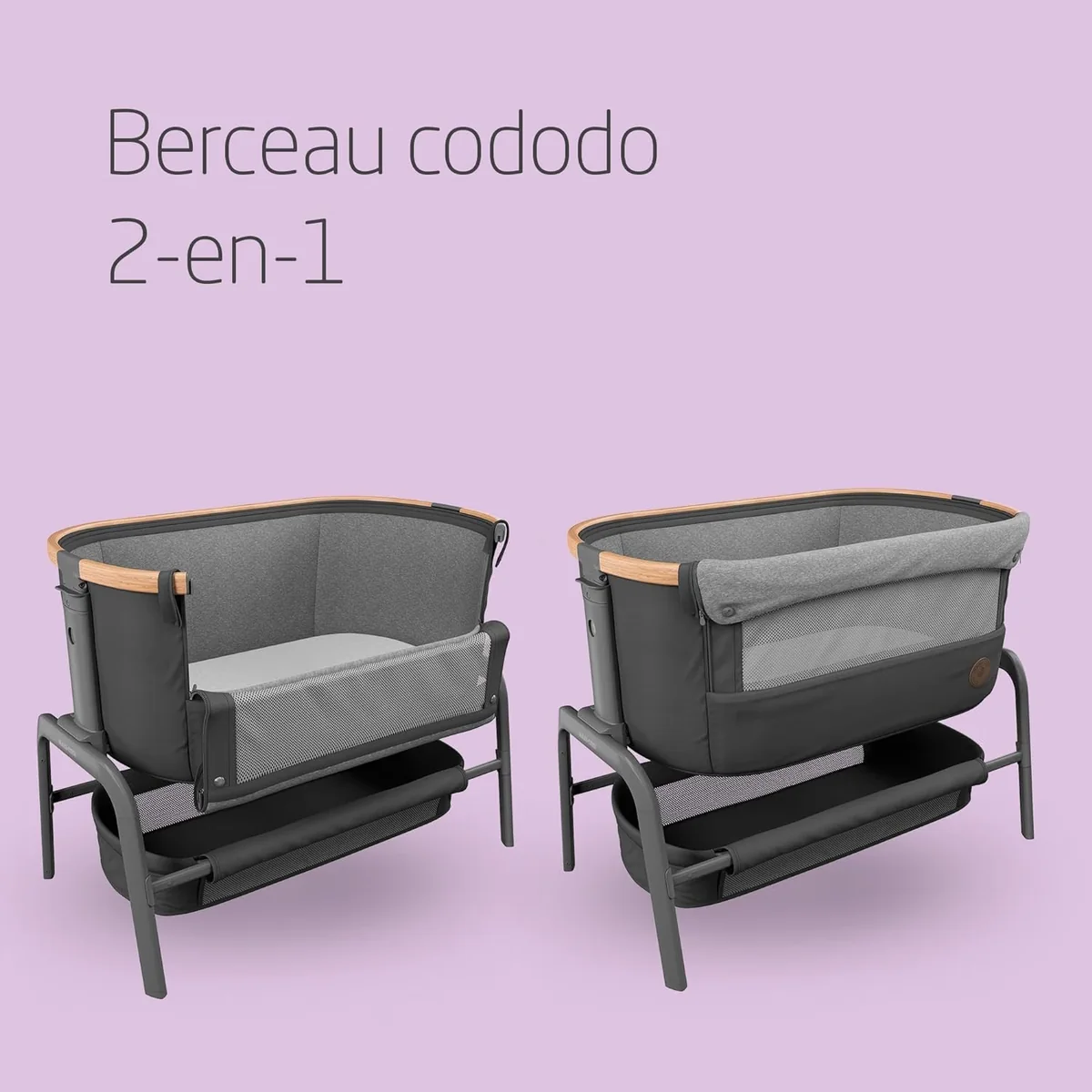
Several features of the Maxi-Cosi Iora directly help with breastfeeding nights. The sliding system brings the crib right up against the mattress, which shortens the distance to pick baby up. The five heights help align the two sleep surfaces. The large mesh window lets you keep an eye on baby even with the side raised. And the big basket keeps everything you need for changes within reach. Our full review covers these points in detail.
Frequently asked questions
Does a bedside crib support breastfeeding?
It makes night feeds easier by keeping baby within arm’s reach, which many mothers appreciate.
Which side should the bedside crib go on?
On the breastfeeding mother’s side, if that side is compatible.
Can I breastfeed lying down?
Yes, but stay alert to the risk of falling asleep, and put baby back in the crib as soon as the feed ends.
Is a bedside crib useful with bottle feeding?
Yes, it makes wake-ups easier and lets parents take turns.
Ready for those first nights?
2-in-1 bedside crib · 0 to 6 months · Up to 9 kg · Travel bag. Prices and colours change often on Amazon: check them, along with the seller, the exact model (Iora, Iora Air, Iora Plus…) and whether it fits your bed, before ordering.
Check the price on AmazonAffiliate link · new tab